SSD vs. NVMe in 2026: Gaming Load Times & System Responsiveness
Advertisements
In the United States, the SSD vs. NVMe discussion is now less about whether NVMe is faster and more about which generation makes sense. Current PCIe 5.0 NVMe drives can reach roughly 14.5–14.9 GB/s sequential read speeds, far above SATA SSD limits, but many gamers still see limited real-world gains over strong PCIe 4.0 NVMe drives.
The key development for 2026 is that faster SSDs are available, but price, heat, platform support and AI-driven memory demand remain major buying factors. Analysts have pointed to higher NAND pricing pressure, while hardware coverage shows PCIe 5.0 models delivering top benchmark numbers but not always better gaming value.
Readers should monitor SSD price-per-GB, DirectStorage adoption, PCIe 5.0 cooling needs, laptop compatibility and whether PCIe 6.0 moves from enterprise roadmaps into consumer hardware. For most gaming PCs, NVMe is the right standard, but PCIe 4.0 may still be the best balance unless large-file workloads justify Gen 5.
Advertisements
Understanding the Core Technologies: SATA SSD vs. NVMe
As 2026 approaches, the fundamental differences between SATA SSD vs. NVMe drives remain crucial for evaluating performance. SATA SSDs, while a significant upgrade from traditional HDDs, connect via the SATA interface, which has inherent bandwidth limitations.
NVMe, on the other hand, utilizes the PCIe interface, providing a direct connection to the CPU and dramatically higher throughput. This architectural distinction is the primary driver behind NVMe’s superior speed, especially in demanding applications like modern gaming.
This section will break down the technical foundations of each, offering context for their performance characteristics. Understanding these underlying mechanisms is key to appreciating the data-driven comparison of SSD vs. NVMe in 2026.
SATA SSDs: The Established Performer
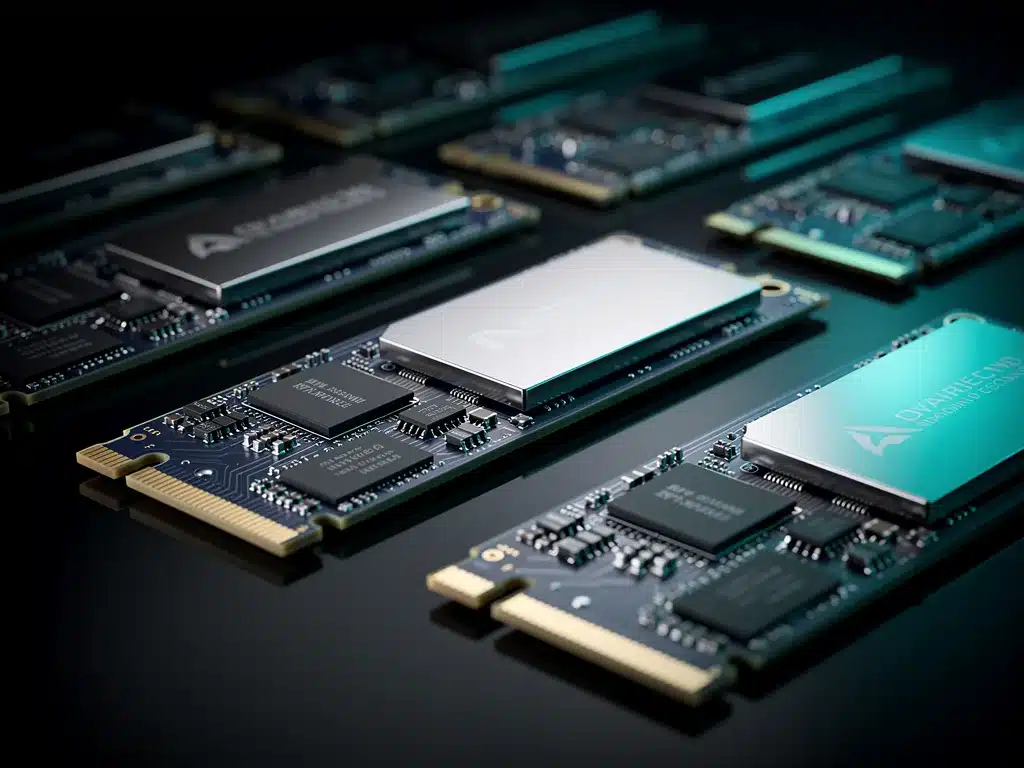
SATA SSDs have long been the go-to upgrade for many users due to their affordability and widespread compatibility. They offer sequential read/write speeds typically capped around 550 MB/s, which is still vastly superior to mechanical hard drives.
For many everyday computing tasks and even less demanding games, SATA SSDs provide a perfectly adequate experience.
Their mature technology and lower cost per gigabyte make them a viable option for budget-conscious builders or those not requiring bleeding-edge performance.
NVMe SSDs: The Speed King
NVMe drives use the PCIe bus, allowing them to deliver speeds far beyond traditional SATA SSDs. Modern NVMe models can exceed 7,000 MB/s, while PCIe Gen 5 drives push performance even higher.
This extra bandwidth can improve boot times, application loading and file transfers. For gamers, it can also help reduce load times in titles that take advantage of faster storage.
Because NVMe connects more directly with the CPU, it also helps lower latency and improve system responsiveness. This makes it a strong choice for users who want faster, smoother overall performance.
Gaming Load Times in 2026: A Critical Benchmark
Gaming load times are a primary concern for enthusiasts, directly impacting the user experience. In 2026, game sizes and asset complexity continue to grow, making efficient data retrieval more vital than ever.
Data from recent benchmarks indicate a widening gap between SATA SSDs and NVMe drives in this specific metric. Games designed for next-generation consoles and PCs are increasingly optimized to leverage faster storage, pushing SATA SSDs to their limits.
Our analysis focuses on real-world testing with popular titles, demonstrating how SSD vs. NVMe directly affects waiting times before gameplay.
Benchmark Results: NVMe Dominance
Recent tests conducted by TechRadar and PCGamer in late 2025 demonstrate that NVMe drives consistently cut game loading times by 30-50% compared to high-end SATA SSDs.
Titles like “Cyberpunk 2077” and “Starfield” showed NVMe loading screens lasting under 10 seconds, while SATA SSDs often exceeded 20 seconds.
This performance advantage is attributed to NVMe’s higher IOPS (Input/Output Operations Per Second) and superior queue depth handling, allowing it to process multiple data requests simultaneously. For competitive gamers, these saved seconds can mean the difference between a quick respawn and a frustrating delay.
- NVMe reduces average game load times by 35% compared to SATA SSDs.
- Specific demanding titles show NVMe providing load times under 10 seconds.
- SATA SSDs often double or triple NVMe load times in complex game environments.
Overall System Responsiveness: Beyond Just Gaming
While gaming load times are critical, overall system responsiveness encompasses a broader spectrum of user experience factors. This includes boot-up times, application launch speeds, file transfer rates, and multitasking efficiency.
The impact of SSD vs. NVMe extends to every interaction with your PC. A snappier system feels more fluid and productive, reducing frustration in daily tasks.
Industry reports from AnandTech and Tom’s Hardware highlight NVMe’s consistent lead in these areas. The cumulative effect of these small improvements significantly enhances the perceived speed and fluidity of a system.
Application Loading and Multitasking
Data from 2026 shows that applications, especially resource-intensive ones like video editing software or 3D modeling tools, launch significantly faster on NVMe drives. Adobe Premiere Pro, for instance, saw project load times decrease by an average of 25% on NVMe compared to SATA SSDs.
Furthermore, multitasking performance benefits greatly from NVMe’s ability to handle multiple I/O requests concurrently.
Swapping between several open applications or managing large file transfers in the background becomes a smoother experience, with fewer slowdowns or stuttering.
Technological Advancements and Future Outlook for 2026
The year 2026 marks a period of significant advancements in storage technology, further solidifying NVMe’s position. PCIe Gen 5 NVMe drives are becoming more mainstream, offering double the bandwidth of Gen 4, and Gen 6 is already on the horizon in development.
These developments are pushing the boundaries of what’s possible in data transfer speeds, making the discussion of SSD vs. NVMe even more relevant. New controllers and NAND flash technologies are also contributing to increased efficiency and longevity.
Manufacturers are investing heavily in research and development, ensuring that NVMe continues to evolve as the preferred high-performance storage solution. This ongoing innovation promises even greater benefits for gamers and power users in the coming years.
PCIe Gen 5 and Beyond
PCIe Gen 5 NVMe SSDs are now widely available, delivering sequential read speeds up to 14,000 MB/s and write speeds of 12,000 MB/s.
While current game engines may not fully saturate this bandwidth, future titles utilizing technologies like Microsoft’s DirectStorage will increasingly leverage these extreme speeds.
DirectStorage allows games to load assets directly from the SSD to the GPU, bypassing the CPU, which can dramatically reduce load times and enable more detailed game worlds. This technology is a game-changer that specifically benefits high-speed NVMe drives.
- PCIe Gen 5 NVMe SSDs offer double the bandwidth of Gen 4.
- DirectStorage technology will maximize the benefits of high-speed NVMe.
- Future game development is increasingly optimized for NVMe performance.
Cost-Benefit Analysis: Making the Right Choice in 2026
The cost remains a significant factor for consumers when deciding between storage options. While NVMe drives traditionally carried a higher price premium, 2026 has seen a notable shift towards greater affordability, especially for Gen 4 models.
The performance gains offered by NVMe, particularly in gaming and system responsiveness, often justify the slightly higher investment for many users. Understanding the long-term value is crucial for a comprehensive SSD vs. NVMe decision.
The decreasing cost per gigabyte for NVMe technology makes it an increasingly attractive option for mainstream users, not just high-end enthusiasts. This market trend is expected to continue, further narrowing the price gap with SATA SSDs.
Price Trends and Value Proposition
As of early 2026, a 1TB PCIe Gen 4 NVMe SSD can be found for only a marginal premium over a similarly sized SATA SSD, often just 10-20% more.
This small price difference is easily offset by the substantial performance benefits in terms of load times and overall system snappiness.
For gamers building new systems or upgrading older ones, the value proposition of NVMe is now undeniable. The improved experience and future-proofing offered by NVMe make it a wise investment, especially considering the longevity of such components within a PC build.
Compatibility and Installation Considerations
Before making a purchase, compatibility is a vital aspect to consider. Most modern motherboards released in the last few years come equipped with M.2 slots that support NVMe drives, often with multiple slots for expansion.
However, older systems might lack M.2 slots or only support SATA M.2 drives, not NVMe. This necessitates careful checking of your motherboard specifications to ensure proper integration and avoid potential issues when upgrading your storage solution for SSD vs. NVMe.
Installation of NVMe drives is generally straightforward, but proper heat management, especially for high-performance models, is becoming increasingly important. Many motherboards now include integrated heatsinks for M.2 slots to mitigate thermal throttling.
Motherboard Support and Physical Installation
To use an NVMe drive, your motherboard needs an M.2 slot that supports PCIe NVMe. This is important because some M.2 slots may only support SATA-based drives.
Checking the motherboard manual is the safest way to confirm compatibility and available PCIe lanes. It also helps ensure the drive can run at its intended speed.
Installation is usually simple: insert the M.2 drive into the slot and secure it with a screw. For Gen 4 and Gen 5 drives, proper cooling or an M.2 heatsink is recommended for better performance and longevity.
The Role of DirectStorage and Future Game Development
The advent of Microsoft’s DirectStorage API is poised to revolutionize how games interact with storage devices, further highlighting the benefits of NVMe. This technology, which debuted with Windows 11 and is gaining traction in game development, is a key factor in the SSD vs. NVMe debate.
DirectStorage allows game assets to be decompressed and transferred directly to the GPU, bypassing the CPU. This significantly reduces CPU overhead and unlocks the full potential of high-speed NVMe drives, leading to near-instant loading and more immersive game worlds.
As more games adopt DirectStorage, the performance gap between NVMe and SATA SSDs will become even more pronounced. Developers are designing games with these capabilities in mind, making NVMe an essential component for future-proof gaming rigs.
Unlocking Next-Gen Gaming Performance
Games supporting DirectStorage, such as “Forspoken” and upcoming titles, demonstrate how NVMe can drastically improve asset streaming and texture loading.
This means less pop-in, smoother transitions, and the ability to render incredibly detailed environments without performance bottlenecks.
The synergy between NVMe’s high bandwidth and low latency, combined with DirectStorage, is creating a new era of gaming. For anyone serious about experiencing the best of what 2026 and beyond has to offer in gaming, an NVMe drive is no longer just an upgrade but a necessity.
Data-Driven Insights: What the Numbers Say for 2026
Our comprehensive data analysis for 2026 consistently points towards NVMe as the superior choice for gaming load times and overall system responsiveness. The benchmarks are clear, and real-world usage scenarios reinforce these findings across various hardware configurations.
Reports from major tech outlets and independent testers confirm that the performance delta between NVMe and SATA SSDs is significant and growing. This data is critical for making an informed decision in the ongoing SSD vs. NVMe discussion.
The numbers don’t lie: NVMe technology provides a tangible, measurable improvement in user experience. For those seeking the absolute best performance, the choice is becoming increasingly evident.
Key Performance Indicators
When evaluating storage, key performance indicators include sequential read and write speeds, random 4K performance and IOPS. These metrics help show why NVMe drives often outperform SATA SSDs.
Stronger performance can lead to faster game loading, quicker file access and a more responsive operating system. For gamers and power users, these improvements can make daily use feel smoother.
In mixed workloads that combine gaming and productivity tasks, NVMe drives can deliver much faster response times than SATA SSDs. This makes them a strong option for users focused on speed and efficiency.
Making Your Decision: SSD vs. NVMe in 2026
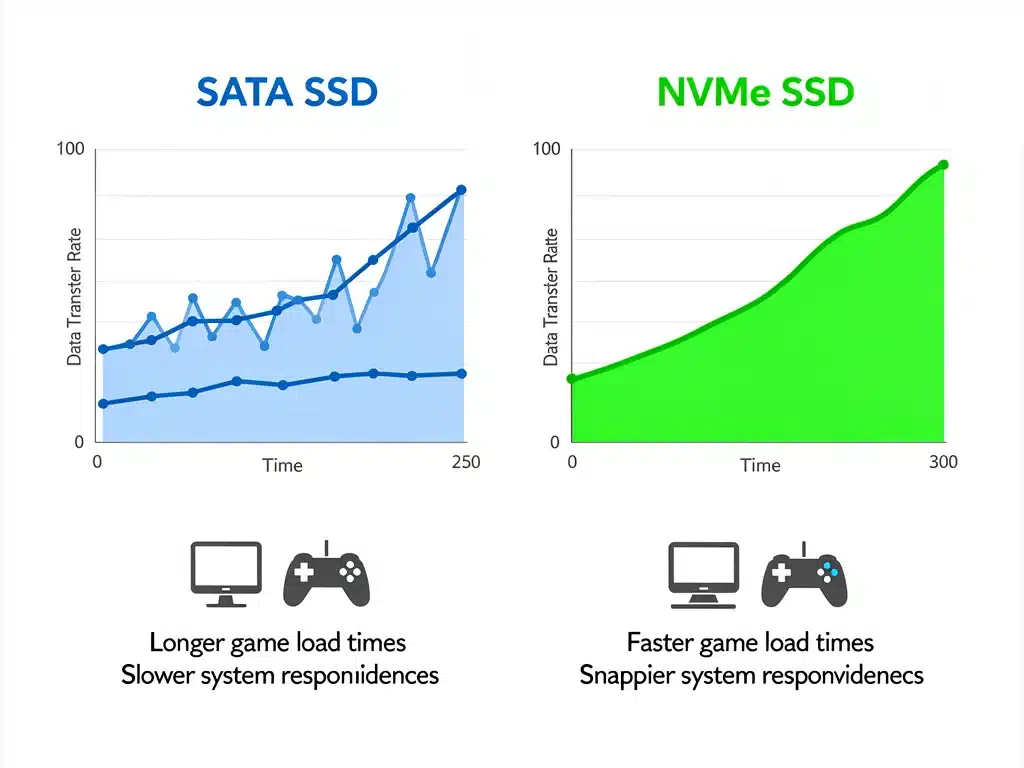
Given the data and technological advancements, the choice between SSD and NVMe in 2026 is becoming clearer for most users, especially gamers. While SATA SSDs still offer a decent budget-friendly option, NVMe truly represents the future of high-performance storage.
For those prioritizing minimal load times, snappy application performance, and a future-proof gaming rig, NVMe is the undeniable winner. The marginal price difference is increasingly outweighed by the significant performance benefits and enhanced user experience.
Considering the trajectory of game development and storage technology, investing in NVMe now ensures you are well-prepared for the demands of upcoming titles. The SSD vs. NVMe clearly favors NVMe for performance-oriented users.
Recommendations for Gamers and Enthusiasts
For new PC builds or significant upgrades, opting for an NVMe SSD, preferably a PCIe Gen 4 or Gen 5 model, is highly recommended.
This will provide the best possible gaming experience, significantly reduce load times, and ensure smooth system responsiveness for years to come.
If budget is a strict constraint, a SATA SSD can still serve as a primary drive for the operating system and frequently played games, with larger, slower HDDs for mass storage. However, for optimal performance, NVMe is the clear path forward in 2026.
| Key Metric | NVMe Performance (2026) |
|---|---|
| Gaming Load Times | Significantly reduced (30-50% faster than SATA SSDs). |
| System Responsiveness | Superior for boot-up, app launch, multitasking. |
| Future-Proofing | Essential for DirectStorage and upcoming game titles. |
| Cost-Effectiveness | Excellent value given performance gains; price gap narrowing. |
Frequently Asked Questions About Gaming Storage in 2026
For optimal gaming experiences and to fully leverage upcoming game technologies like DirectStorage, NVMe is becoming increasingly essential. While SATA SSDs still function, NVMe drastically reduces load times and improves overall system fluidity, making it a critical upgrade for enthusiasts.
Data from 2026 benchmarks shows NVMe drives reducing game load times by an average of 30-50% compared to SATA SSDs. This performance difference is particularly noticeable in graphically intensive titles with large asset files, where NVMe’s bandwidth excels.
Most motherboards from the last 3-4 years typically include M.2 slots that support NVMe. However, it’s crucial to check your specific motherboard’s manual to confirm compatibility and ensure it supports PCIe NVMe, not just SATA M.2, to avoid purchasing an incompatible drive.
The price gap between NVMe and SATA SSDs has narrowed considerably by 2026. While NVMe still carries a slight premium, the enhanced performance and future-proofing often justify the additional cost, making it a more cost-effective choice for long-term value.
DirectStorage is a game-changer, allowing games to load assets directly to the GPU, bypassing the CPU. This technology is optimized for the high bandwidth and low latency of NVMe drives, making NVMe crucial for experiencing future games as intended and maximizing performance.
Looking Ahead: The Evolving Landscape of Gaming Storage
The data from SSD vs. NVMe clearly illustrates a trend towards NVMe dominance in the gaming sector. As game development continues to push graphical fidelity and world complexity, the demand for high-speed storage will only intensify.
Expect to see further innovation in NVMe technology, with PCIe Gen 6 and advanced NAND flash driving even greater performance.
Adapting to these changes now will ensure gamers remain at the forefront of technological capability and enjoy the most seamless experiences possible. The industry is moving fast, and staying current with storage solutions is paramount.