Mechanical Keyboards in 2026: Switches & Gaming Performance
Advertisements
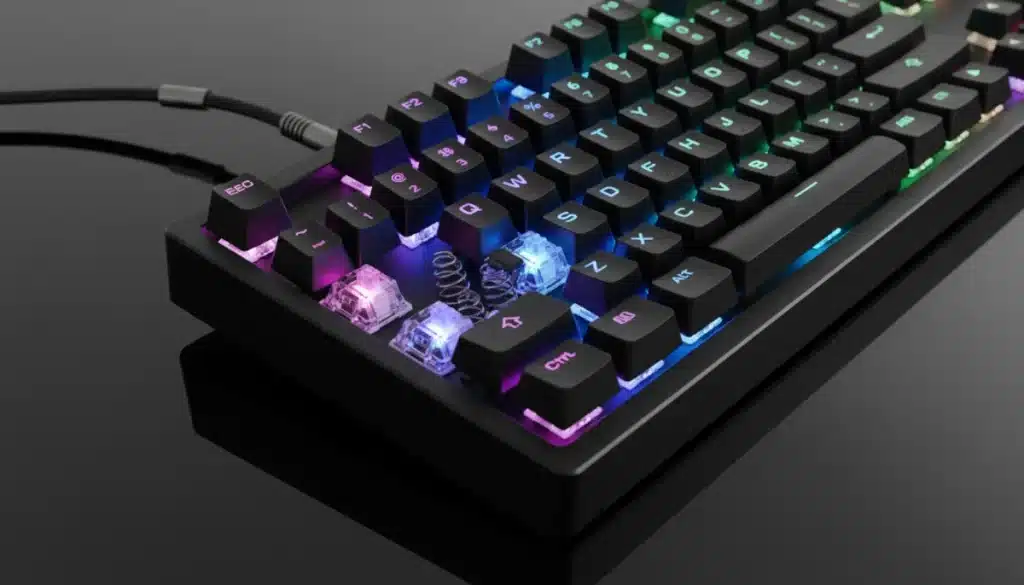
Latest developments in Mechanical Keyboards in 2026 show continued innovation in switch technology, with manufacturers focusing on faster actuation, customizable feel, and improved durability for competitive gaming. Magnetic Hall Effect switches, optical switches, and highly tunable mechanical switches are becoming increasingly popular among enthusiasts and esports players due to their adjustable actuation points and rapid response times.
The choice of switch remains one of the most important factors affecting gaming performance. Linear switches are generally favored for fast-paced competitive games because of their smooth keystrokes and minimal resistance. Tactile switches provide noticeable feedback that many users prefer for a balance between gaming and typing, while clicky switches remain popular among those who enjoy audible feedback despite their higher noise levels.
Looking ahead, gamers should monitor advancements in adjustable actuation technology, rapid trigger functionality, wireless latency improvements, and software customization features. As keyboard manufacturers continue to blur the line between hardware and software optimization, switch selection is expected to play an even larger role in tailoring performance to specific gaming genres and individual preferences throughout 2026.
Advertisements
The Evolution of Mechanical Keyboards in 2026
The landscape of gaming peripherals continues to advance rapidly, with mechanical keyboards remaining a cornerstone for competitive and casual players alike. In 2026, we observe significant refinements in switch technology, aiming for enhanced responsiveness and durability.
These innovations directly address the increasing demands of modern gaming, where milliseconds can dictate victory or defeat. Manufacturers are pushing boundaries, exploring new materials and actuation methods to deliver superior typing and gaming experiences.
Understanding these developments is crucial for any gamer looking to optimize their setup and gain a tangible edge in performance. The market now offers a bewildering array of choices, each with unique characteristics.
Understanding Core Switch Types and Their Mechanics
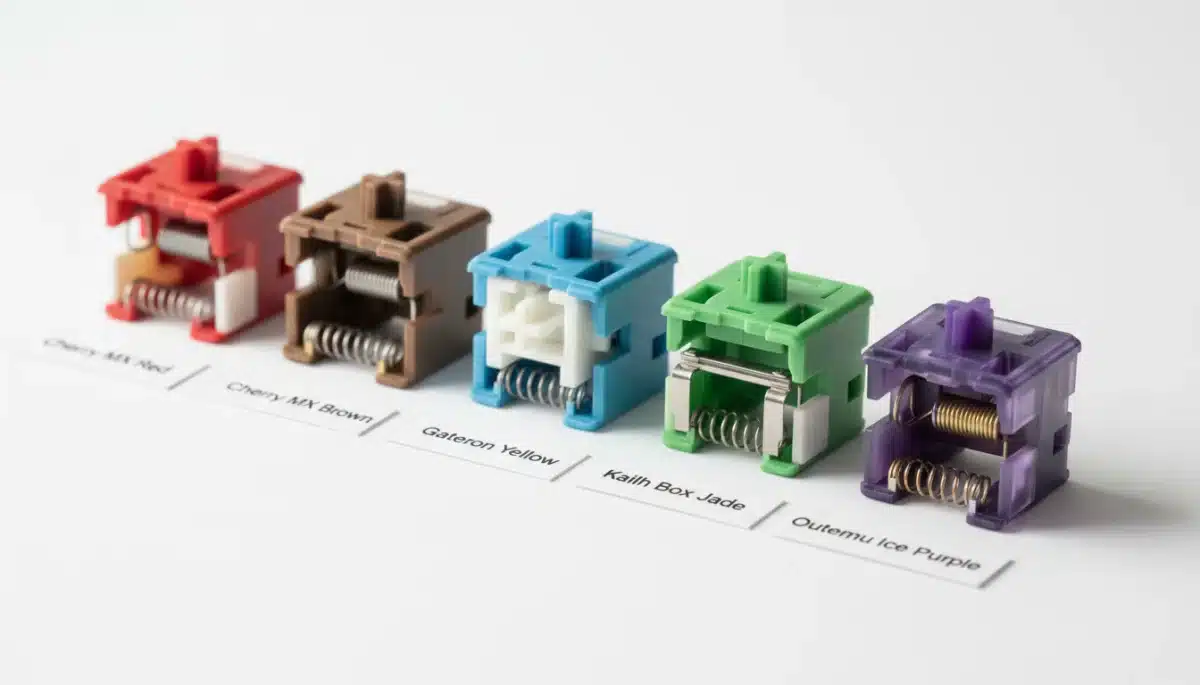
Mechanical keyboard switches are the heart of these devices, defining the tactile, auditory, and performance characteristics. In 2026, the fundamental categories—linear, tactile, and clicky—still dominate, but with numerous specialized iterations.
Linear switches, known for their smooth, consistent keystroke without a tactile bump or audible click, are a favorite among fast-paced gamers. They allow for rapid, uninterrupted key presses, which is critical in genres like FPS and rhythm games.
Tactile switches provide a noticeable bump during actuation, offering feedback without the loud click, appealing to users who value confirmation of a key press. Clicky switches add an audible click alongside the tactile bump, providing both sensory cues.
Linear Switches: Speed and Precision
Linear switches, such as the popular Cherry MX Red or their optical equivalents, continue to be a top choice for gamers prioritizing speed. Their uninterrupted travel allows for swift double-taps and quick reactions, minimizing input lag.
Newer generations of linear switches in 2026 often feature shorter pre-travel distances and lighter actuation forces. This design philosophy further reduces the time between intent and action, making them ideal for highly competitive environments.
The consistent feel across all keys ensures that muscle memory translates directly into reliable performance, preventing unexpected hangups or variations during intense gameplay sessions.
- Smooth Keystroke: No tactile bump or audible click, allowing for seamless travel.
- Rapid Actuation: Often features shorter pre-travel for quicker response times.
- Gaming Preference: Highly favored by FPS and rhythm game players for speed.
- Consistent Feel: Predictable input across all keys enhances muscle memory.
Tactile Switches: Feedback without the Noise
Tactile switches, exemplified by Cherry MX Brown or similar designs, offer a subtle bump mid-press, signaling actuation without a loud sound. This provides crucial feedback for accuracy, particularly in genres where precise key presses are paramount.
For gamers who type extensively or play strategy and RPG titles, the tactile feedback helps reduce errors and improve overall comfort. It strikes a balance between gaming performance and general usability.
In 2026, advancements in tactile switches include more refined bump profiles and quieter operation. This makes them increasingly versatile for both gaming and professional use, without disturbing others.
Clicky Switches: Auditory and Tactile Confirmation
Clicky switches, such as Cherry MX Blue, remain popular for users who appreciate both a tactile bump and a distinct audible click. This dual feedback provides undeniable confirmation of a key press, which can be satisfying for many.
While some competitive gamers might find the loud click distracting, others argue it enhances their typing rhythm and reduces missed key presses. This makes them a personal preference, not a universal choice for optimal gaming performance.
The robust feedback of clicky switches makes them excellent for general typing and certain gaming scenarios where precise, deliberate inputs are prioritized over sheer speed. Their distinctive sound is a hallmark for many enthusiasts.
- Distinct Feedback: Features both a tactile bump and an audible click for clear actuation.
- Typing Experience: Often preferred for typing due to satisfying sensory cues.
- Gaming Niche: Suitable for games where deliberate, confirmed presses are more important than rapid succession.
- Personal Preference: The sound can be a pro or con depending on individual user needs.
Emerging Switch Technologies in 2026
Beyond the traditional categories, 2026 sees a rise in innovative switch technologies designed to further optimize Mechanical Keyboards. Optical switches, for instance, use a light beam to register key presses, eliminating debounce delay and offering unparalleled speed.
Magnetic switches, or Hall effect switches, are gaining traction for their adjustable actuation points and rapid reset capabilities. This allows gamers to customize the sensitivity of each key, adapting to different games or playstyles on the fly.
Furthermore, low-profile mechanical switches are becoming more prevalent, offering the tactile feel of mechanical keys in a thinner form factor. This caters to gamers who prefer a more ergonomic design without sacrificing performance.
Optical Switches: Light-Speed Actuation
Optical mechanical switches leverage infrared light to detect key presses, bypassing traditional metal contact points entirely. This design significantly reduces the physical wear and tear on components, extending switch lifespan considerably.
The primary advantage for gaming is the near-instantaneous actuation, as the light beam registers the press immediately, without any debounce delay. This translates to a measurable increase in response time, critical for competitive play.
In 2026, manufacturers are refining optical switches to offer various tactile and linear feels, making them a versatile option for a wider range of gamers. Their durability and speed make them a strong contender for the future of gaming input.
Magnetic (Hall Effect) Switches: Customizable Input
Magnetic switches utilize the Hall effect, employing magnets to detect key presses without physical contact. This technology allows for highly customizable actuation points, letting users define exactly how far a key needs to travel before registering.
This level of customization is revolutionary for gaming, enabling players to set ultra-sensitive triggers for quick actions or deeper presses for deliberate commands. Rapid trigger functionality, where keys reset instantly upon lift, is a significant advantage.
The versatility and durability of magnetic switches position them as a premium choice for enthusiasts seeking the ultimate control over their input devices. They represent a significant leap forward in personalized gaming experiences.
Impact on Gaming Performance: Speed, Accuracy, and Comfort
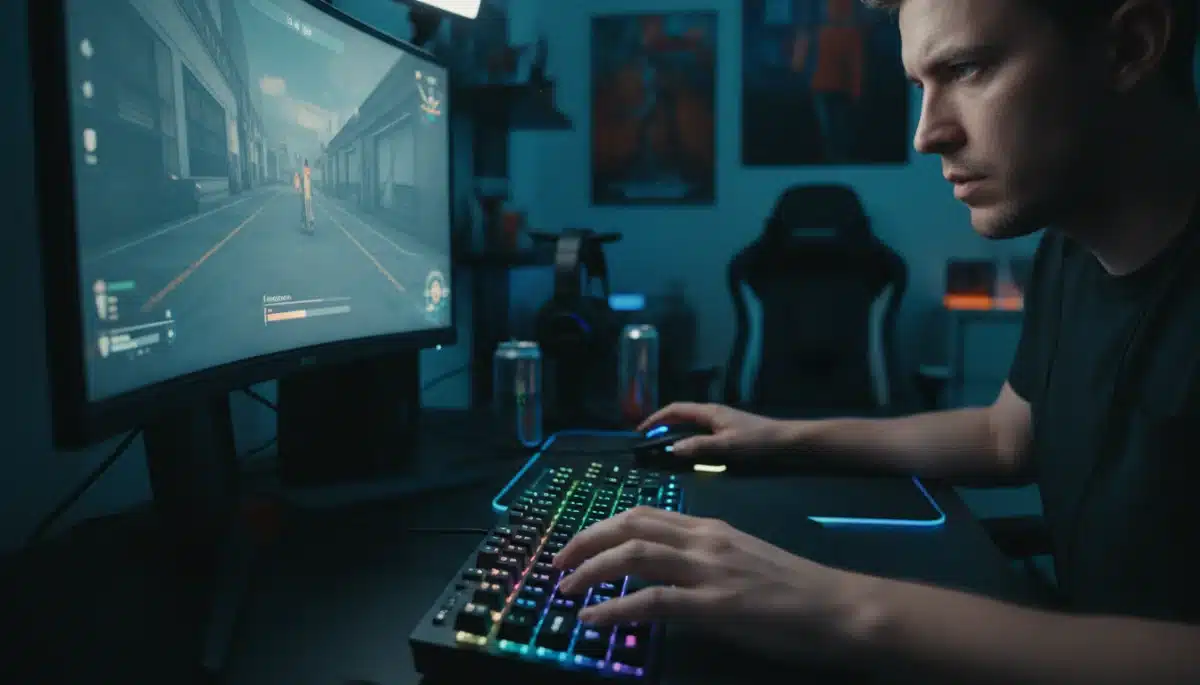
The choice of mechanical keyboard switch directly influences key aspects of gaming performance: speed, accuracy, and comfort. Each switch type offers a distinct advantage depending on the game genre and individual player preferences, making the selection a strategic decision.
For high-octane FPS games, linear switches with low actuation force provide the necessary speed for rapid movement and shooting. Their smooth travel ensures no impedance during intense moments, allowing for fluid control and quick reactions.
Conversely, for strategy games or MOBAs, tactile or even clicky switches can enhance accuracy by providing clear feedback on each command. This reduces misclicks and ensures every action is intentional, leading to more precise gameplay. Comfort, too, plays a vital role in extended gaming sessions, where switch feel can prevent fatigue.
Optimizing for Specific Game Genres
The optimal switch type often varies significantly based on the specific game genre. In fast-paced competitive shooters, linear switches are almost universally preferred due to their capacity for rapid, unhindered key presses.
For games requiring precise, deliberate actions, such as real-time strategy titles or role-playing games, tactile switches provide invaluable feedback. This ensures that every command is registered intentionally, reducing input errors during complex sequences.
The customization offered by newer technologies, like magnetic switches, further blurs these lines, allowing gamers to fine-tune their keyboard to excel in multiple genres. This adaptability is a key trend in Mechanical Keyboards.
- FPS Games: Linear switches for speed and rapid input.
- RTS/MOBA: Tactile switches for accuracy and feedback.
- Rhythm Games: Linear switches for quick, consistent presses.
- MMORPGs: Tactile or clicky for confirmation of complex macros.
Future Trends in Mechanical Keyboard Switches
Looking ahead, the development of mechanical keyboard switches in 2026 points towards greater personalization and integration with software ecosystems. Manufacturers are investing heavily in switches that offer dynamic adjustability and smart features.
Hot-swappable switch sockets are becoming standard, allowing users to easily experiment with different switch types without soldering. This empowers gamers to tailor their keyboards for specific games or even different sections of their keyboard.
Expect to see more advanced software integration, where switch characteristics like actuation force or travel distance can be adjusted via companion apps. This level of control will define the next generation of Mechanical Keyboards.
| Key Feature | Impact on Gaming Performance |
|---|---|
| Linear Switches | Maximizes speed for rapid key presses, ideal for FPS. |
| Tactile Switches | Enhances accuracy with clear feedback, suitable for RTS/MOBA. |
| Optical Switches | Offers light-speed actuation, eliminating debounce for ultimate speed. |
| Magnetic Switches | Provides customizable actuation points and rapid reset for adaptable play. |
Frequently Asked Questions About Gaming Keyboard Switches
For competitive gaming, linear switches are often preferred due to their smooth, uninterrupted keystroke. They allow for faster actuation and easier double-tapping, which is crucial in fast-paced games like FPS. Optical and magnetic linear switches further enhance this with even quicker response times and customizable actuation, offering a significant edge in performance.
Optical switches use a beam of light to register a key press, unlike traditional mechanical switches that rely on physical contact. This eliminates debounce delay, resulting in near-instantaneous actuation and greater durability due to fewer moving parts. They offer a faster response time, which is a key advantage for gaming performance in Mechanical Keyboards.
Yes, magnetic (Hall effect) switches can significantly improve gaming accuracy. Their key advantage lies in customizable actuation points, allowing you to set the exact sensitivity for each key. This precision helps prevent accidental presses and ensures every command is intentional, leading to more accurate inputs and refined control in various game genres.
Clicky switches, while less common in top-tier competitive play due to their audible feedback, are still relevant for certain gamers in 2026. Their distinct tactile bump and click provide clear confirmation of a key press, which some users find satisfying and helpful for typing accuracy. They are a matter of personal preference rather than a universal performance booster.
Hot-swappability is crucial for modern mechanical keyboards as it allows users to easily change switches without soldering. This feature provides immense flexibility, enabling gamers to experiment with different switch types to find their ideal feel for various games. It also enhances the longevity and customization potential of a keyboard, adapting to evolving preferences and game requirements.
Looking Ahead: The Personalized Gaming Experience
The evolution of Mechanical Keyboards underscores a clear trend towards personalization and advanced technology. The focus is no longer just on raw speed, but on tailored experiences that optimize individual player strengths.
As new switch types emerge and existing ones are refined, gamers can expect an even greater degree of control and customization over their input devices. This continuous innovation ensures that mechanical keyboards will remain at the forefront of gaming hardware, continually pushing the boundaries of what is possible.
Monitoring these advancements will be key for anyone serious about maximizing their gaming potential. The future promises keyboards that adapt not just to games, but to the unique demands of each player, making the selection of switches more critical than ever.