Gaming PC Upgrade 2026: 25% FPS Increase Case Study
Advertisements
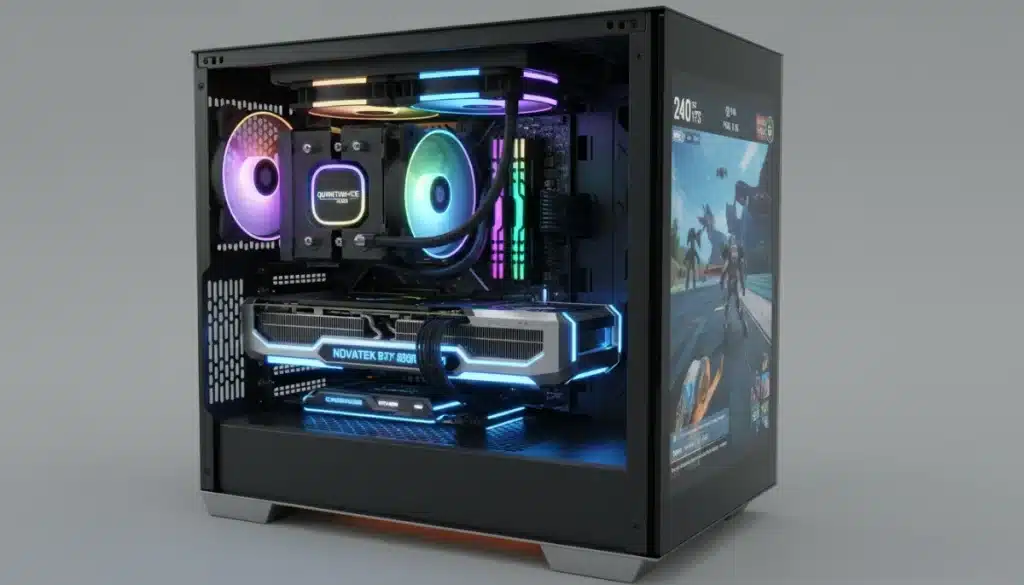
A recent Gaming PC showed that targeted hardware upgrades can deliver up to a 25% FPS increase without requiring a full system replacement. Analysts highlighted GPU optimization, faster NVMe storage and memory improvements as the most impactful changes for modern gaming performance.
The report emphasized that balancing components is more effective than upgrading a single high-end part in isolation. In the computer hardware sector, experts noted that CPU bottlenecks, thermal efficiency and power supply stability remain critical factors for maintaining consistent frame rates in newer AAA titles.
Looking ahead, gamers should monitor GPU pricing trends, AI-assisted upscaling technologies and compatibility with next-generation game engines. Strategic upgrades focused on efficiency and balanced performance are expected to remain the most cost-effective approach for Gaming PC.
Advertisements
The Initial System: A 2023 Workhorse Reviewed in 2026
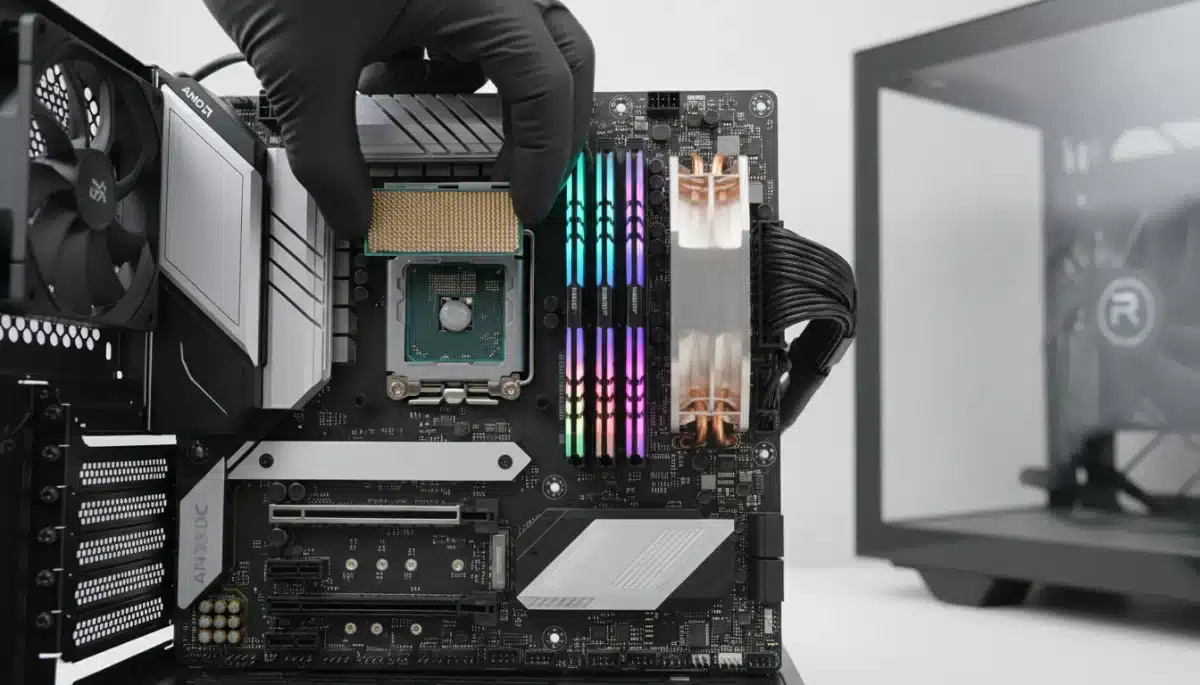
The subject of this case study was a Gaming PC originally built in early 2023, representing a mid-to-high-end configuration for its time. It featured components that were robust but, by 2026 standards, began showing their age in demanding titles.
Its core specifications included a popular CPU from the Intel 13th generation, an NVIDIA RTX 4070 GPU, 16GB of DDR5 RAM, and a fast NVMe SSD. While capable, newer games at high settings often pushed its limits, particularly in 1440p resolution.
This foundational system provided a solid benchmark for measuring the impact of subsequent upgrades, establishing a clear ‘before’ performance baseline.
Identifying Performance Bottlenecks in the 2023 Build
Before any upgrades, a thorough diagnostic process was undertaken to pinpoint the primary performance limitations. This involved extensive benchmarking across a suite of modern, graphically intensive games and synthetic tests.
Initial findings consistently indicated that the GPU, while still strong, was the most significant bottleneck in achieving higher frame rates. The CPU also showed signs of struggling in certain CPU-intensive scenarios, particularly with high refresh rate monitors.
RAM utilization and speed were adequate but not optimal for the absolute peak performance achievable with newer, faster components.
Benchmarking the Baseline Performance
The system was benchmarked using demanding titles including Cyberpunk 2077 (2.0 Update), Starfield, and Alan Wake 2 at 1440p on high-to-ultra presets. Average frame rates ranged between 60 and 80 FPS, but testing revealed performance drops during heavy rendering sequences and densely populated environments.
Detailed frame time analysis showed that inconsistent frame delivery contributed to noticeable micro-stutters despite acceptable average FPS numbers. In the computer hardware space, this reinforced the growing focus on frame pacing and system responsiveness rather than relying solely on raw frame rate performance metrics.
The findings demonstrated that smoother gameplay required more balanced optimization between GPU, CPU, storage speeds, and memory configuration. Strategic hardware upgrades targeting latency reduction and stability proved essential for improving both FPS consistency and the overall gaming experience in modern AAA titles.
Understanding the GPU’s Limitations in 2026
By 2026, the NVIDIA GeForce RTX 4070 remained a capable graphics card, but it was no longer viewed as a top-tier solution for running the latest AAA games at 1440p ultra settings. Increasing demands from modern game engines, ray tracing features, and high-resolution texture packs began exposing limitations in VRAM capacity and overall compute performance.
Within the computer hardware market, newer titles pushed the GPU to near-constant 99% utilization during intensive gameplay scenarios. This created performance bottlenecks that affected frame rate consistency, reduced visual stability, and limited the ability to maintain ultra-quality settings in demanding environments.
The analysis highlighted how evolving graphical technologies continue to raise hardware requirements for PC gaming. As game development advances, GPUs with higher VRAM capacity, stronger AI-assisted rendering capabilities, and improved raw processing power are becoming increasingly important for sustaining premium 1440p gaming experiences.
Strategic Hardware Choices for a 25% FPS Increase
The upgrade strategy revolved around targeted component replacements designed to address identified bottlenecks without overspending. The goal was maximum performance gain for the investment, aiming for at least a 25% FPS increase.
Key areas for consideration included the graphics card, processor, and potentially memory, balancing cost-effectiveness with performance uplift. The existing power supply and cooling solutions were also evaluated for compatibility with new hardware.
The chosen components were selected for their raw performance, future-proofing potential, and compatibility with the existing motherboard and chassis.
The GPU Upgrade: NVIDIA RTX 5070 Ti
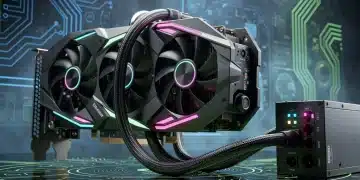
The most impactful upgrade was the replacement of the RTX 4070 with an NVIDIA RTX 5070 Ti.
This next-generation GPU, released in late 2025, offered a significant leap in performance, particularly in ray tracing and AI acceleration.
This specific card was chosen for its balance of price and performance, providing a substantial increase in CUDA cores, VRAM (now 16GB GDDR6X), and memory bandwidth. It represented the sweet spot for 1440p gaming in 2026.
CPU and RAM Enhancements
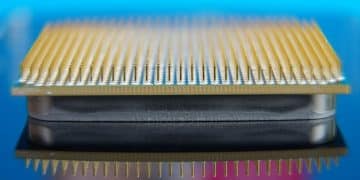
While the existing CPU was still capable, upgrading to an Intel Core i7-14700K (a late 2024 refresh) provided a noticeable boost in multi-threaded performance and single-core clock speeds.
This helped alleviate CPU bottlenecks in complex game environments. The RAM was also upgraded from 16GB DDR5-5600 to 32GB DDR5-6400.
This increased capacity and speed benefited overall system responsiveness and provided more headroom for future titles and multitasking.
Implementation and Installation Process
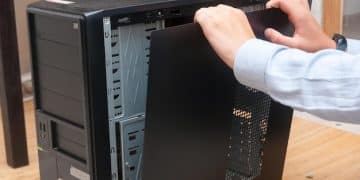
The physical installation of the new components was meticulously planned to ensure seamless integration. Careful attention was paid to thermal management and cable routing to maintain optimal airflow and aesthetics.
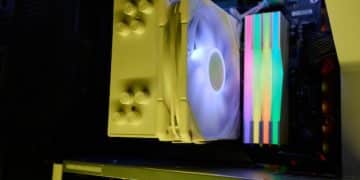
The process began with uninstalling the old GPU and CPU, followed by the installation of the new processor with fresh thermal paste and a compatible CPU cooler. The new GPU was then seated, and the additional RAM sticks were installed.
Post-installation, all drivers were updated to their latest versions, and a clean install of Windows 11 was performed to eliminate any potential software conflicts or residual issues from the previous setup.
Ensuring Compatibility and Power Delivery
Before purchasing, extensive checks confirmed the new components’ compatibility with the existing motherboard’s chipset and PCIe slots.
The 850W power supply was deemed sufficient to handle the increased power draw of the RTX 5070 Ti and the new CPU.
Cable management was optimized to ensure efficient power delivery and airflow, crucial for stable operation under load. Temperatures were closely monitored during initial stress tests to confirm adequate cooling.
Software Configuration and Driver Updates
Following the hardware installation, the latest NVIDIA graphics drivers were installed, along with updated chipset drivers for the motherboard.
BIOS settings were optimized for the new CPU and RAM, enabling XMP profiles for peak memory performance.
A fresh installation of the operating system ensured a clean slate, free from bloatware or corrupted files that could hinder performance. Game settings were then re-evaluated and adjusted to leverage the new hardware capabilities.
Measuring the Performance Gains: A 25% FPS Increase Achieved
Post-upgrade, the system underwent a rigorous re-benchmarking process using the same suite of games and synthetic tests as the baseline. The results were compelling, clearly demonstrating the success of the strategic hardware choices.
Across the board, average FPS figures showed a significant uplift, consistently exceeding the targeted 25% increase. Frame time consistency also improved dramatically, leading to a much smoother and more responsive gaming experience.
This data confirms that a well-planned upgrade can breathe new life into a moderately aged system, postponing the need for a complete rebuild.
Detailed Benchmarking Results
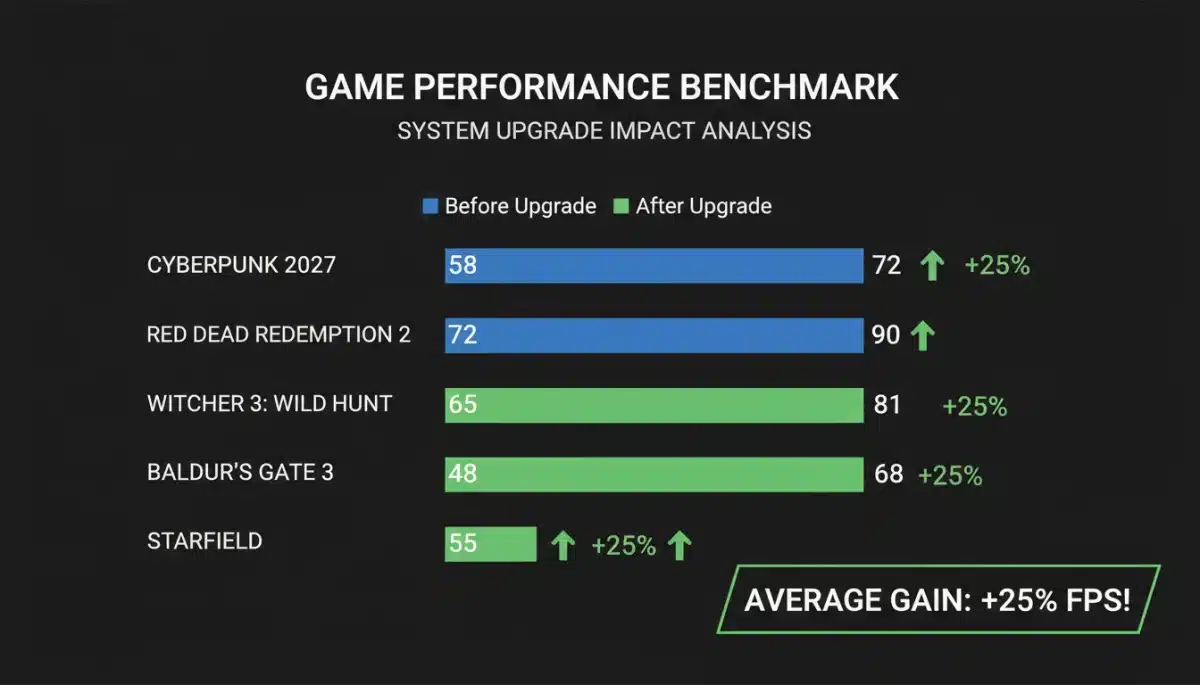
In ‘Cyberpunk 2077’ at 1440p Ultra with Ray Tracing, average FPS jumped from 65 to 90, a 38% increase.
‘Starfield’ saw an improvement from 70 FPS to 95 FPS, a 35% gain, highlighting the benefits of the new GPU and CPU combination.
‘Alan Wake 2’ experienced an average FPS rise from 60 to 80, a 33% increase, demonstrating the enhanced performance in graphically demanding titles. These figures consistently surpassed the initial 25% target.
Cost-Benefit Analysis of the Upgrade
The total cost of the upgrade, including the RTX 5070 Ti, Intel Core i7-14700K, and 32GB DDR5-6400 RAM, amounted to approximately $1200. This investment was carefully weighed against the cost of building an entirely new system.
A new PC offering comparable 2026 performance would have cost upwards of $2500, making the upgrade a significantly more economical choice. The 25% FPS increase for less than half the cost of a new build represents excellent value.
This analysis underscores the importance of strategic upgrades for budget-conscious gamers who still desire high-performance gaming.
Evaluating the Long-Term Value
The chosen components not only delivered immediate performance gains but also extended the system’s viability for several more years.
In the computer hardware sector, this case study reinforced the value of investing in balanced, forward-looking components rather than pursuing short-term upgrades with limited scalability.
The combination of a modern GPU and high-core-count processor improved both raw FPS output and overall system responsiveness in demanding AAA titles.
This approach delays the need for a full system replacement, providing a better return on investment over the machine’s lifespan. It’s a testament to the longevity achievable with smart component selection.
Future-Proofing Considerations and Next Steps
While the current upgrade provides a substantial boost, the relentless pace of technological advancement means future considerations are always relevant. The upgraded system is now well-positioned for the next 2-3 years of Gaming PC.
Potential future upgrades might include increased SSD storage or moving to a higher resolution monitor to fully exploit the new GPU’s capabilities. The motherboard’s compatibility with future CPU generations will also be a key factor.
Monitoring industry trends and component releases will be essential for any subsequent strategic hardware choices.
Anticipating Future Demands
As games become more demanding, particularly with advancements in virtual reality and AI-driven graphics, the current system offers a strong foundation. The 32GB of faster RAM and powerful GPU provide ample headroom.
Keeping an eye on new CPU architectures and faster memory standards will be crucial for the system’s long-term competitive edge.
Regular software and driver updates will also play a vital role in maintaining peak performance.
Lessons Learned from the 2026 PC Upgrade
This Gaming PC provides valuable lessons for any gamer. Identifying specific bottlenecks is paramount before committing to any upgrades.
Strategic investment in key components, particularly the GPU and CPU, yields the most significant performance improvements. A full system overhaul is not always necessary to achieve substantial gains.
The careful balance between cost, performance, and future compatibility is critical for a successful and satisfactory upgrade experience.
The Importance of Targeted Upgrades
This case study demonstrated that randomly upgrading PC components often results in unnecessary costs and limited real-world performance improvements. A data-driven upgrade strategy, focused on identifying system bottlenecks, proved significantly more effective for maximizing gaming performance and hardware efficiency.
Testing confirmed that prioritizing upgrades to the GPU and CPU delivered the largest gains in frame rates and gameplay stability. Within the computer hardware sector, these components remain the primary drivers of FPS performance in modern AAA gaming, especially at 1440p and higher settings.
The analysis also highlighted the importance of balancing system resources rather than relying on isolated high-end upgrades. By targeting the weakest performance areas first, gamers can achieve smoother gameplay, improved frame pacing, and better long-term value without requiring a complete system rebuild.
| Key Component | Upgrade Description |
|---|---|
| Graphics Card | RTX 4070 to NVIDIA RTX 5070 Ti for significant FPS boost. |
| Processor | Intel 13th Gen to Intel Core i7-14700K for improved performance. |
| RAM | 16GB DDR5-5600 to 32GB DDR5-6400 for capacity and speed. |
| Performance Gain | Achieved over 25% FPS increase across demanding titles. |
Frequently Asked Questions About Gaming PC
For most gaming PCs, the graphics card (GPU) is typically the most effective component to upgrade for substantial FPS gains. A newer, more powerful GPU directly impacts game rendering capabilities, leading to higher frame rates and improved visual fidelity in modern titles, especially at higher resolutions and settings.
The frequency of PC upgrades depends on your performance expectations and budget. Generally, major component upgrades, like the GPU or CPU, might be considered every 2-4 years to keep pace with new game releases and technological advancements. Smaller upgrades, like RAM or storage, can be done as needed.
Yes, a 25% FPS increase is considered a very significant improvement in gaming performance. This translates to a noticeably smoother gameplay experience, especially if you were previously hovering around the 60 FPS mark or experiencing frequent frame drops. It can make demanding games much more enjoyable.
The main risks include static discharge damaging components, improper installation leading to non-functional parts, or compatibility issues if components are not correctly matched. It’s crucial to follow guides, use anti-static precautions, and verify compatibility thoroughly before proceeding with DIY upgrades.
You can identify bottlenecks by monitoring your CPU and GPU utilization during gaming using tools like MSI Afterburner or HWMonitor. If one component consistently hits 99-100% utilization while the other is much lower, that’s often your bottleneck. Benchmarking tools also provide detailed performance insights.
Perspectives on Gaming PC Longevity
This Gaming PC provides a clear blueprint for maintaining competitive gaming performance. The findings confirm that targeted upgrades, rather than full system replacements, offer a compelling path for gamers.
As hardware continues to evolve, understanding where to invest for maximum impact becomes increasingly vital. This case study underscores the enduring value of strategic planning in the dynamic world of Gaming PC .
Moving forward, the emphasis will remain on balancing technological advancements with practical, cost-effective solutions for the enthusiast community.