Cooling Solutions for High-Performance Gaming in 2026
Advertisements
The Imperative of Advanced Thermal Management in 2026
The landscape of high-performance gaming in 2026 demands increasingly sophisticated thermal management. As CPUs and GPUs push clock speeds and core counts to unprecedented levels, the heat generated can quickly become a bottleneck, leading to performance degradation.
Preventing thermal throttling is crucial for maintaining the consistent frame rates essential for competitive and immersive gameplay. Gamers are no longer just seeking raw power but also the stability that comes with effective heat dissipation.
Advertisements
Industry reports confirm that inadequate cooling can reduce a system’s lifespan and negatively impact user experience, making investment in robust cooling solutions a sound decision for any serious gamer.
Next-Generation CPU and GPU Architectures and Their Cooling Demands
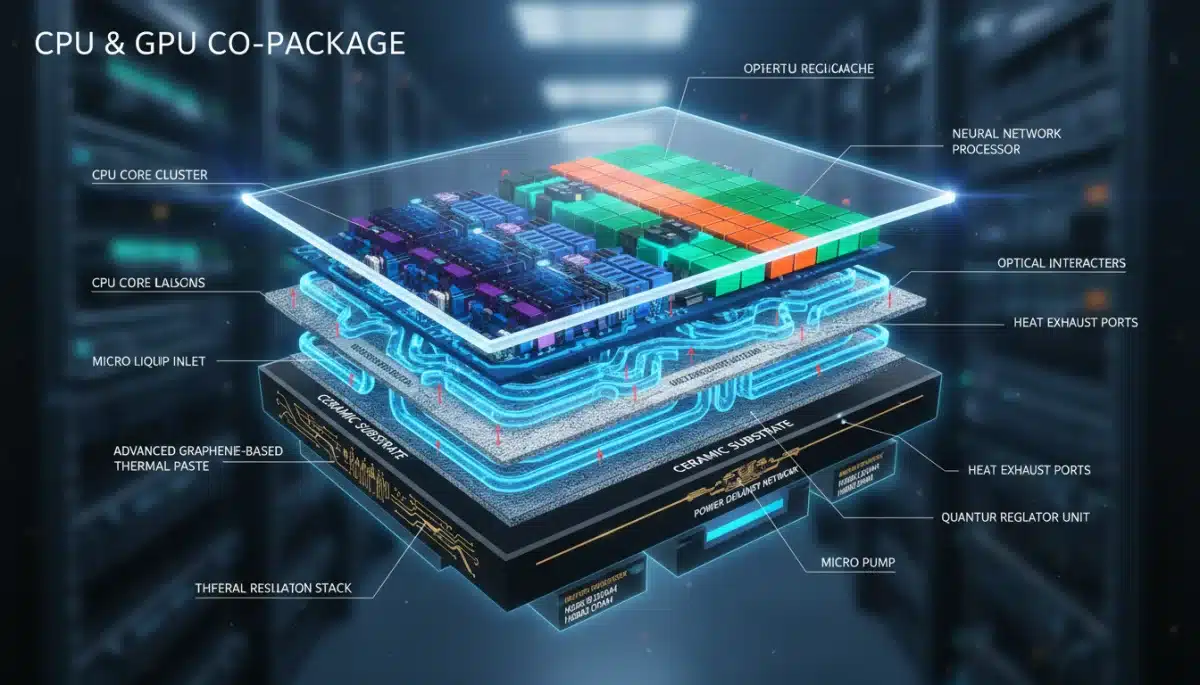
The latest CPU and GPU architectures, slated for widespread adoption by 2026, feature denser transistor counts and more aggressive power draw profiles. This evolution inherently increases the thermal load on components, challenging traditional air cooling methods.
Manufacturers are designing these new chips with integrated thermal sensors and dynamic clock adjustment mechanisms, which are highly sensitive to temperature fluctuations. Optimal performance hinges on keeping these temperatures well within specified operational limits.
Consequently, the efficacy of cooling solutions directly correlates with the ability of these advanced processors to sustain their peak performance levels, impacting everything from rendering times to in-game responsiveness.
Liquid Cooling: The Dominant Force
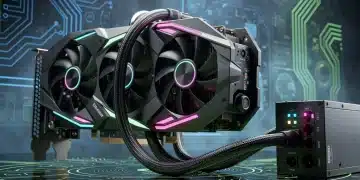
- AIO (All-in-One) Coolers: Simpler installation, closed-loop systems gaining efficiency and aesthetic appeal.
- Custom Loop Systems: Unparalleled thermal performance, offering extensive customization for enthusiasts.
- Advanced Coolants: Development of new coolants with improved thermal conductivity and longevity.
Vapor Chamber Technology Expansion
Vapor chamber technology, previously reserved for high-end GPUs and some laptops, is expanding its application. This technology offers superior heat spreading capabilities compared to traditional heat pipes, allowing for more uniform heat distribution across a larger surface area.
This expansion is vital for managing localized hotspots on increasingly complex chip designs, ensuring that heat is efficiently transferred away from critical components. The adoption of larger and more sophisticated vapor chambers is a key trend to watch.
Expect to see hybrid cooling solutions integrating vapor chambers with traditional liquid or air cooling elements, providing a multi-layered approach to thermal management that addresses the diverse needs of next-gen hardware.
Air Cooling Innovations: Beyond Traditional Heatsinks
While liquid cooling gains traction, air cooling continues to innovate, offering cost-effective and reliable alternatives for many gamers. New designs focus on maximizing surface area and airflow efficiency, pushing the boundaries of what air can achieve.
Improvements in fan technology, including magnetic levitation bearings and optimized blade designs, reduce noise while increasing static pressure and cubic feet per minute (CFM). This ensures more effective heat dissipation through dense fin arrays.
Modern air coolers also incorporate advanced heat pipe configurations and direct-contact heat pipe designs, enhancing heat transfer from the CPU or GPU IHS (Integrated Heat Spreader) to the heatsink fins. This pushes the limits of passive and semi-passive cooling.
Phase-Change and Exotic Cooling: Niche but Powerful
For the most extreme enthusiasts and overclockers, phase-change cooling systems are making limited but significant strides. These systems use refrigerants to achieve sub-ambient temperatures, offering the ultimate in thermal performance.
While not mainstream due to complexity and cost, advancements in miniaturization and efficiency could make these solutions more accessible. They represent the pinnacle of preventing thermal throttling, allowing hardware to operate far beyond stock specifications.
Beyond traditional methods, research into exotic cooling solutions like thermoelectric coolers (TECs) and even immersion cooling continues. While still largely experimental for consumer use, these technologies hint at future possibilities for managing extreme heat loads in gaming systems.
Software-Defined Cooling and AI Integration
The future of cooling isn’t just about hardware; software plays an increasingly critical role. AI-driven fan curves and dynamic power management systems are becoming standard, optimizing cooling performance based on real-time loads and temperature data.
These intelligent systems can predict thermal thresholds and adjust fan speeds or pump rates proactively, ensuring consistent performance without unnecessary noise. This represents a significant leap from static fan profiles.
Integration with game engines and operating systems allows for even more granular control, where cooling profiles can be tailored to specific games or applications, maximizing efficiency and minimizing acoustic output while maintaining optimal gaming cooling solutions.
Smart Fan Control and System Monitoring
- Adaptive Fan Curves: AI-driven algorithms adjust fan speeds based on predictive thermal models.
- Integrated Telemetry: Real-time data from sensors across the system informs cooling decisions.
- User-Defined Profiles: Gamers can create custom cooling behaviors for different scenarios.
The Role of Case Design and Airflow Optimization
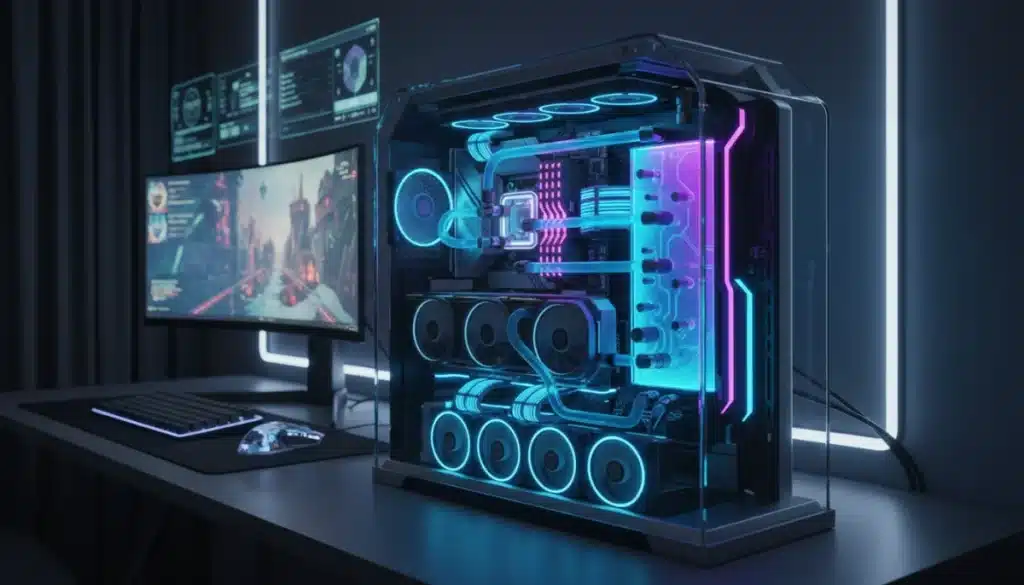
Even with cutting-edge coolers, the PC case remains a fundamental element in effective thermal management. Optimized case designs with unobstructed airflow paths are crucial for moving hot air out and drawing cool air in efficiently.
Manufacturers are focusing on modular designs, tool-less access, and strategic placement of fan mounts to facilitate superior airflow. This includes designs that prioritize positive or negative pressure setups for optimal dust management and cooling efficiency.
Proper cable management inside the case also contributes significantly to unimpeded airflow, preventing hot spots and ensuring that internal components receive a steady supply of cool air. This holistic approach is key to effective cooling solutions for high-performance gaming.
Thermal Interface Materials: The Unsung Heroes
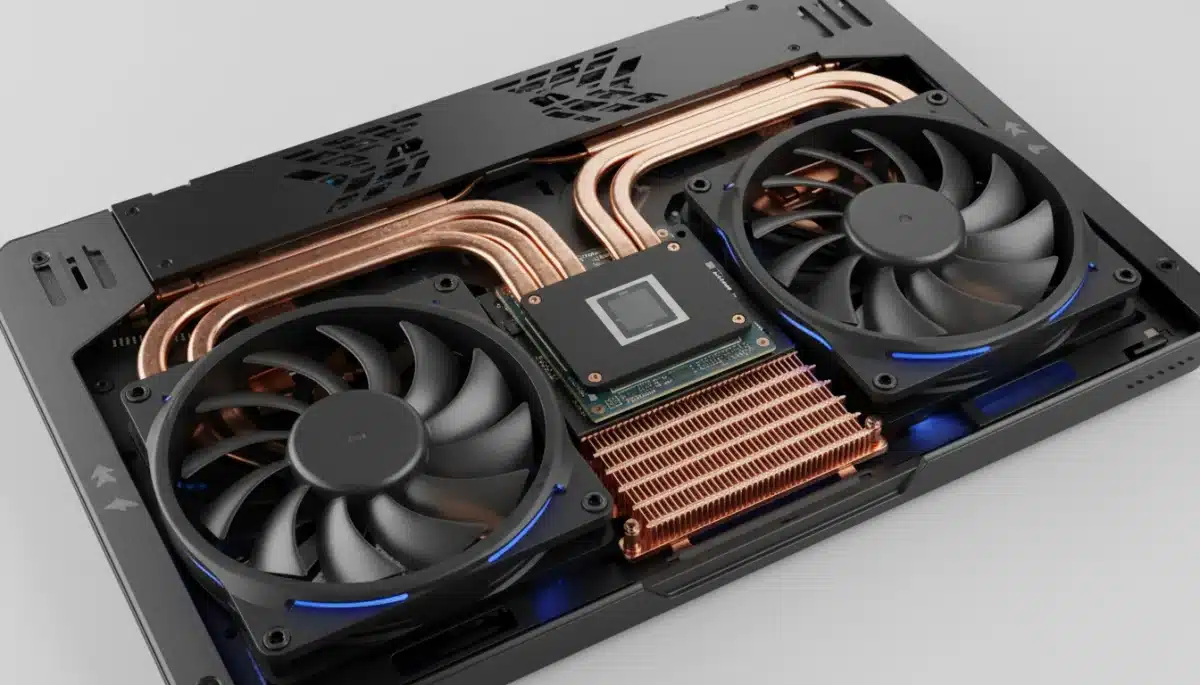
Often overlooked, thermal interface materials (TIMs) like thermal paste and thermal pads are critical for efficient heat transfer between components and their coolers. Innovations in TIMs are yielding significant performance gains.
Newer formulations of thermal paste, including liquid metal compounds and advanced polymer matrices, offer superior thermal conductivity and improved longevity. These materials ensure maximum contact and minimal thermal resistance.
The application method and quality of TIMs directly impact the overall efficiency of any cooling solution, making their selection and proper installation an important consideration for preventing thermal throttling and achieving consistent FPS.
Power Delivery Systems and VRM Cooling
High-performance gaming systems require robust power delivery systems (VRMs) on motherboards, which also generate substantial heat. Effective VRM cooling is just as important as CPU and GPU cooling for system stability and longevity.
Motherboard manufacturers are integrating larger and more efficient heatsinks for VRMs, often with dedicated heat pipes or even small fans. This ensures that power components operate within safe temperature limits, preventing instability.
Overclocking, in particular, places immense stress on VRMs, making advanced cooling solutions for these components essential. Neglecting VRM cooling can lead to power throttling and system crashes, even if the CPU and GPU are adequately cooled.
| Key Area | Impact on Gaming Performance |
|---|---|
| Liquid Cooling | Superior heat dissipation for CPUs and GPUs, critical for consistent high FPS. |
| Airflow Optimization | Ensures cool air intake and hot air exhaust, vital for overall system thermal health. |
| Thermal Interface Materials | Maximizes heat transfer efficiency between components and coolers. |
| Software Control | Dynamic fan curves and AI optimization for predictive thermal management. |
Frequently Asked Questions About Gaming Cooling Solutions
Preventing thermal throttling is crucial because it ensures your CPU and GPU maintain their maximum clock speeds, delivering consistent frame rates and smooth gameplay. When components overheat, they automatically reduce performance to prevent damage, leading to noticeable dips in FPS and an inferior gaming experience.
In 2026, advanced liquid cooling (both AIO and custom loops) remains the most effective for top-tier systems. However, innovations in air cooling, vapor chambers, and software-defined fan control also provide excellent results, especially when integrated with optimized case airflow for efficient thermal management.
AI integrates into modern cooling by enabling dynamic fan curves and predictive thermal management. It analyzes real-time temperature data and system load to proactively adjust fan speeds and pump rates, optimizing cooling efficiency while minimizing noise. This intelligent automation ensures stable performance without manual intervention.
Yes, upgrading your thermal paste to a high-quality compound can significantly improve heat transfer between your CPU/GPU and its cooler. Over time, stock thermal paste can degrade, reducing its effectiveness. A fresh application of advanced thermal interface material ensures optimal conductivity, contributing to better overall cooling solutions for high-performance gaming.
PC case design is fundamental for cooling performance. A well-designed case provides optimal airflow pathways, allowing cool air to enter and hot air to exit efficiently. Proper fan placement, dust filters, and effective cable management within the case contribute significantly to maintaining lower internal temperatures and preventing thermal throttling.
Looking Ahead: The Future of Gaming Cooling
The ongoing evolution of Cooling Solutions underscores a continuous battle against heat. As hardware becomes more potent, the methods to keep it cool must advance in parallel. This means a convergence of traditional and exotic techniques, driven by intelligent software.
Gamers should anticipate further integration of AI, more efficient thermal interface materials, and innovative case designs that prioritize airflow.
Monitoring official announcements from hardware manufacturers and cooling solution providers will be key to staying ahead. The goal remains unwavering: to unlock and sustain peak performance for the most demanding gaming experiences.