Liquid Cooling vs. Air Cooling: 2026 Performance for Gaming
Advertisements
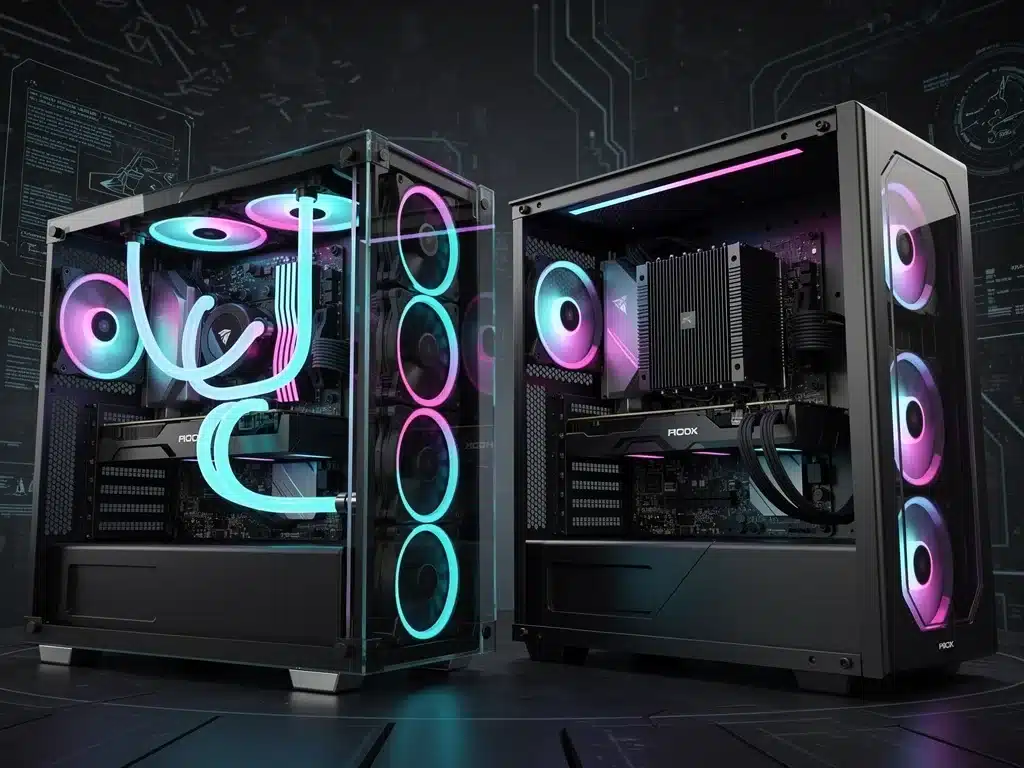
Liquid Cooling vs. Air Cooling remains an important debate for modern gaming rigs. Both options can manage heat effectively, but they differ in thermal performance, noise levels, cost, and maintenance needs.
Liquid cooling may offer stronger temperature control for high-performance builds, overclocking, and compact setups. Air cooling, on the other hand, is often simpler, more affordable, and easier to maintain.
Choosing between Liquid Cooling vs. Air Cooling depends on your budget, hardware, performance goals, and comfort with installation. Understanding these differences helps gamers build a stable, reliable, and long-lasting PC.
Advertisements
Understanding the Fundamentals: How Each System Works
At its core, thermal management in a PC aims to dissipate heat generated by components, primarily the CPU and GPU, to prevent throttling and ensure stable operation. Both liquid and air cooling achieve this, but through fundamentally different mechanisms that carry distinct implications for performance and long-term reliability.
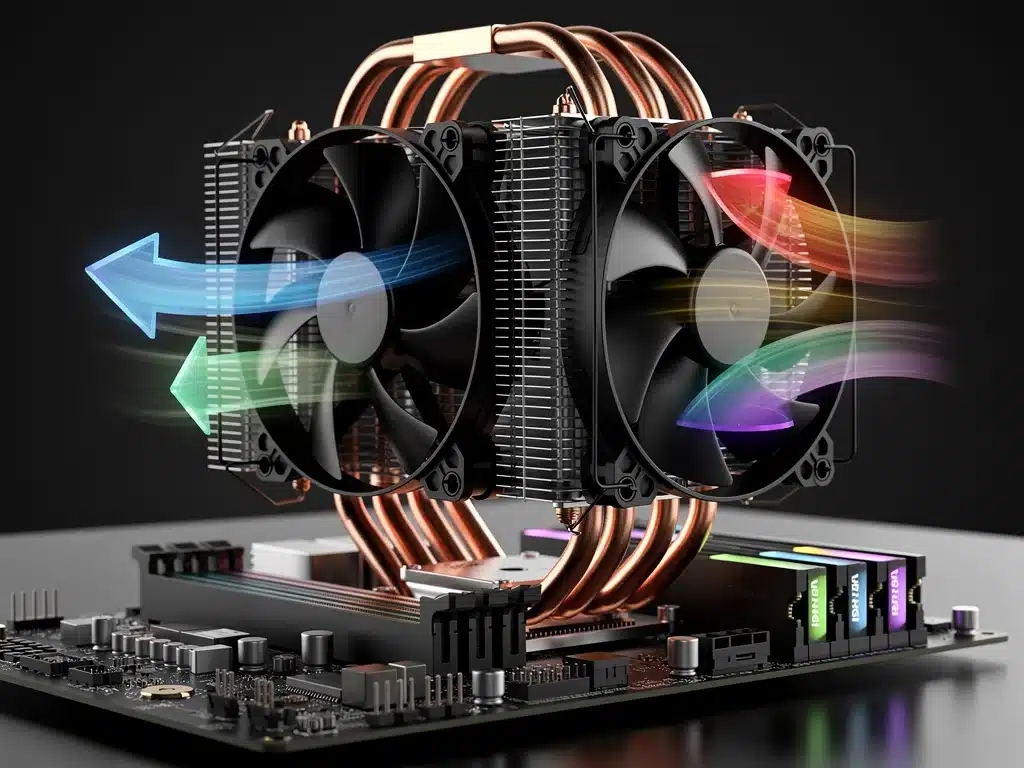
Air cooling systems rely on heat sinks, typically made of copper or aluminum, which absorb heat from the CPU. This heat is then transferred to a series of fins, and fans blow air across these fins, carrying the heat away from the component and out of the system. This method is straightforward, often more affordable, and has been the standard for decades.
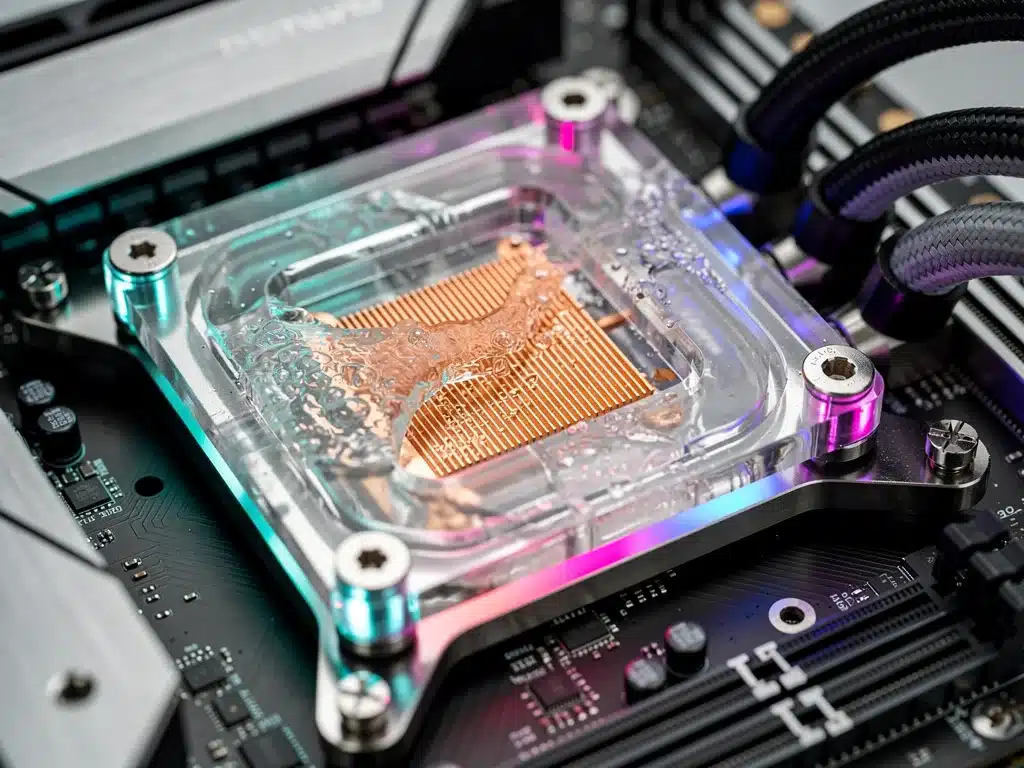
Liquid Cooling vs. Air Cooling, conversely, uses a liquid coolant to transfer heat. A cold plate mounted on the CPU absorbs heat, which is then carried by the liquid through tubes to a radiator. Fans mounted on the radiator then dissipate this heat into the ambient air. This closed-loop system, common in All-in-One (AIO) coolers, offers a more efficient heat transfer medium.
Thermal Performance: Benchmarking for 2026 Gaming Loads
When evaluating Liquid Cooling vs. Air Cooling, thermal performance under sustained gaming loads is paramount. Modern CPUs and GPUs, especially those from Intel and AMD, are designed to boost to very high frequencies, but only if thermal headroom allows.
In 2026, high-end liquid cooling solutions, particularly 360mm or 420mm AIOs, consistently demonstrate superior thermal dissipation capabilities. They can maintain lower CPU temperatures under heavy loads, enabling processors to sustain higher boost clocks for longer periods. This directly translates to smoother gameplay and higher frame rates in demanding titles.
While premium air coolers have made significant advancements, often rivaling smaller AIOs, they still generally struggle to match the peak thermal performance of top-tier liquid coolers. Their effectiveness can also be more sensitive to case airflow and ambient room temperatures, which can fluctuate significantly during extended gaming sessions.
Liquid Cooling’s Edge in Temperature Management
Liquid cooling’s ability to move heat away from the CPU more efficiently via the coolant allows for greater thermal stability. This is particularly beneficial for overclockers or those pushing their hardware to its limits, as it provides a larger thermal buffer against sudden temperature spikes.
Moreover, the larger surface area of radiators in liquid cooling systems, compared to the more compact design of air coolers, contributes to their enhanced heat dissipation.
This design advantage becomes increasingly important as CPU power consumption continues to rise, generating more heat that needs to be efficiently managed.
- Superior heat transfer capacity for high-TDP CPUs.
- More stable temperatures during intense gaming or rendering.
- Better thermal headroom for aggressive overclocking.
Air Cooling’s Robustness and Simplicity
Despite liquid cooling’s thermal advantages, high-end air coolers remain a formidable option, offering excellent performance for many users.
Their robust design, devoid of pumps and liquid, means fewer potential points of failure, contributing to a simpler and often more reliable long-term operation.
The best air coolers today can handle most mainstream and even some high-end CPUs without breaking a sweat, provided the case has adequate airflow.
They are also less prone to issues like pump noise or the slight risk of leaks, which, while rare, can be a concern for some users considering Liquid Cooling vs. Air Cooling.
Noise Levels: A Critical Factor for Immersion
For many gamers, the acoustic profile of their PC is as important as its raw performance. The constant hum of fans can detract from immersion, making noise levels a significant consideration in the Liquid Cooling vs. Air Cooling.
Generally, liquid cooling systems, especially AIOs, can offer a quieter operation under load compared to air coolers. This is because their fans, often mounted on a radiator, can spin at lower RPMs due to the liquid’s superior heat transfer efficiency. The pump, while a potential noise source, is usually designed to be very quiet in modern units.
Air coolers, to achieve comparable thermal performance, often require larger fans or higher fan speeds, which can generate more audible noise. While advancements in fan technology have mitigated this, a powerful air cooler under heavy load will typically be more noticeable than an equivalent liquid cooler.
Optimizing for Silent Performance
Manufacturers are continually innovating to reduce noise in both cooling types. Liquid coolers benefit from improved pump designs and quieter, high-static pressure fans specifically tuned for radiators.
This allows for effective cooling at lower fan speeds, directly reducing overall system noise.
Air cooler manufacturers are focusing on larger heat sinks and more efficient fin designs to maximize surface area, enabling slower fan speeds for the same cooling capacity. Additionally, anti-vibration mounts and improved fan blade designs are contributing to a quieter air-cooling experience.
- Liquid cooling often provides a quieter experience under heavy load.
- Pump noise in AIOs has been significantly reduced in recent models.
- Air coolers can be louder due to higher fan RPMs required for cooling.
Installation and Maintenance: Practical Considerations
Beyond raw performance, the practical aspects of installation and ongoing maintenance play a crucial role in the choice between Liquid Cooling vs. Air Cooling. These factors can influence user experience and the long-term reliability of the system.
Air coolers are generally simpler to install. They consist of a heatsink and fan assembly that mounts directly to the CPU socket. While some larger models can be bulky and challenging to fit in smaller cases, the process is typically straightforward and requires fewer steps compared to liquid cooling.
Liquid cooling, particularly AIOs, involves more components: a CPU block, tubes, a radiator, and fans. This requires careful planning for radiator placement within the case and proper cable management. Custom loop liquid cooling, while offering the best performance, is significantly more complex and recommended only for experienced builders.
Ease of Setup and Initial Build
For first-time builders or those preferring a hassle-free experience, air cooling presents a clear advantage. The installation process is less intimidating, and there’s no concern about liquid leaks or pump failures.
This simplicity contributes to a quicker build time and reduces potential points of error. AIO liquid coolers have become much easier to install over the years, with pre-filled loops and standardized mounting hardware.
However, ensuring proper radiator placement for optimal airflow and avoiding tube kinks still requires more attention than a typical air cooler installation. The choice often comes down to comfort level with PC building.
Long-Term Upkeep and Reliability
Maintenance for air coolers is generally minimal, primarily involving occasional dusting of the heatsink fins and fans to ensure unrestricted airflow.
With no moving liquid or pumps, the risk of component failure is lower, contributing to air cooling’s reputation for robust reliability over many years.
Liquid coolers, while increasingly reliable, do have a pump as a mechanical component that can eventually fail. While modern AIOs are designed for years of maintenance-free operation, some users might prefer the absolute simplicity of air cooling for maximum longevity and peace of mind. Custom loops require periodic fluid changes and component checks.
Cost-Effectiveness and Value Proposition
The financial investment required for each cooling solution is a significant determinant for many gamers when considering Liquid Cooling vs. Air Cooling. Price points vary widely, but general trends can guide purchasing decisions.
High-performance air coolers typically range from $50 to $100, offering excellent cooling for their price. This makes them a very cost-effective solution for most gaming builds, providing a strong balance of performance and affordability without significant compromises.
AIO liquid coolers start around $80 for smaller models and can exceed $200 for larger, more premium units with advanced features and RGB lighting. Custom liquid cooling loops can easily run into several hundred dollars, representing a substantial investment for enthusiasts seeking the absolute best in thermal management and aesthetics.
Budgeting for Optimal Performance
For a mid-range gaming PC, a quality air cooler often provides ample cooling without breaking the bank. The money saved can then be allocated to other critical components like a more powerful GPU or additional storage, potentially offering a greater overall performance boost for the budget.
However, for top-tier CPUs, especially those intended for heavy overclocking or sustained, multi-core workloads like streaming and content creation alongside gaming, the investment in a high-end liquid cooler can be justified.
The ability to maintain lower temperatures directly translates to sustained peak performance, maximizing the return on investment for the CPU itself.
Impact on Hardware Longevity: A 2026 Perspective
One of the most critical aspects of the Liquid Cooling vs. Air Cooling is how each method influences the lifespan of your PC components. Sustained high temperatures are detrimental to electronics, accelerating degradation and potentially leading to premature failure.
By effectively keeping CPU temperatures lower, liquid cooling can theoretically contribute to longer component lifespans. Reduced thermal stress means less wear and tear on the silicon and surrounding components. However, this benefit is often marginal unless the air cooling solution is significantly inadequate for the CPU in question.
Modern CPUs are designed to operate safely within their thermal limits, and even well-performing air coolers will keep temperatures within an acceptable range for long-term use. The primary concern isn’t necessarily which cooler keeps the CPU coldest, but rather which one prevents it from consistently hitting its thermal throttling point.
Protecting Your Investment
Both liquid and air cooling, when appropriately sized for the CPU and installed correctly, will adequately protect your hardware from thermal damage.
The key is to avoid cheap, insufficient cooling solutions that allow temperatures to frequently spike or remain elevated under load.
The longevity factor in the Liquid Cooling vs. Air Cooling often comes down to consistency. Liquid cooling tends to offer more consistent thermal performance across a wider range of ambient conditions and workloads, which can provide a slight edge in preventing long-term thermal fatigue.
- Lower, more stable temperatures from liquid cooling can reduce thermal stress.
- Well-implemented air cooling is perfectly sufficient for component protection.
- Avoiding sustained high temperatures is key for hardware longevity, regardless of cooling type.
Aesthetics and Customization: Personalizing Your Build
Beyond pure performance and longevity, the aesthetic appeal and customization options are undeniable factors in the choice between Liquid Cooling vs. Air Cooling. For many, a gaming PC is also a showpiece.
Liquid cooling systems, particularly AIOs with RGB lighting on the pump block and fans, offer a sleek, clean look. The visible tubing and radiator can enhance the futuristic aesthetic of a build, especially when paired with tempered glass side panels. Custom liquid loops take this to an extreme, allowing for unique color schemes and intricate tubing runs.
Air coolers, while typically more utilitarian in appearance, have also embraced aesthetics. Many high-end models feature blacked-out designs, subtle RGB accents, or unique fin patterns. However, their bulky nature can sometimes obscure other components on the motherboard, which might be a consideration for those aiming for a minimalist or highly visible internal layout.
Building a Visually Stunning PC
Liquid cooling often creates a more striking and modern interior for a gaming PC. With less bulk around the CPU socket, components like RGB RAM and VRM heatsinks can remain more visible.
Air coolers are usually less flashy, but they can still add a strong industrial look. Many designs emphasize size, durability, and raw cooling power.
The best choice depends on personal preference and the overall theme of the build. Whether choosing Liquid Cooling vs. Air Cooling, aesthetics can play an important role alongside performance.
Emerging Trends and Future Outlook for 2026
The landscape of PC cooling is constantly evolving, with new technologies and refinements emerging each year. For Liquid Cooling vs. Air Cooling, understanding these trends is crucial for future-proofing decisions.
In liquid cooling, we are seeing advancements in pump efficiency, quieter operation, and smart control systems that integrate with motherboard software for dynamic fan and pump speed adjustments. Micro-fin designs on cold plates are becoming even more sophisticated, further improving heat transfer efficiency.
Air cooling is not standing still; breakthroughs in heat pipe technology, phase-change materials, and advanced fan designs are continually pushing the boundaries of what’s possible with air. Hybrid solutions, combining elements of both, may also become more prevalent, offering a blend of advantages.
Innovation in Cooling Technologies
The demand for higher core counts and faster CPU and GPU clock speeds is pushing cooling technology forward. Both liquid and air cooling manufacturers are improving performance, efficiency, and noise control.
Looking toward 2026, smarter thermal management is expected to become more common in gaming PCs. AI-driven fan curves and real-time monitoring can help cooling systems respond better to changing workloads.
These improvements may optimize temperatures while keeping noise levels under control. For gamers, this means a smoother experience, stronger performance, and better long-term component protection.
| Key Aspect | 2026 Analysis |
|---|---|
| Thermal Performance | Liquid cooling generally offers superior peak thermal dissipation, crucial for high-end CPUs and sustained boost clocks. Air cooling provides excellent performance for most mainstream chips. |
| Noise Levels | Liquid coolers often run quieter under load due to efficient heat transfer. Air coolers have improved but can still be louder when pushed to their limits. |
| Hardware Longevity | Both methods adequately protect hardware if properly sized and installed. Liquid cooling may offer slightly more consistent thermal stability, potentially reducing long-term stress. |
| Installation & Cost | Air cooling is simpler to install and generally more affordable. Liquid cooling, especially AIOs, requires more planning and a higher budget but has become more user-friendly. |
Frequently Asked Questions About Liquid Cooling vs. Air Cooling
Not always. While high-end liquid cooling generally offers superior thermal performance, especially for overclocked or high-TDP CPUs, a top-tier air cooler can often match or even outperform smaller AIO liquid coolers for standard gaming loads. The choice depends on specific CPU, case airflow, and user preferences for noise and aesthetics.
Air coolers typically have fewer points of failure (no pump, no liquid) and can last for many years with minimal maintenance. Modern AIO liquid coolers are also very reliable, designed for 5-7 years of operation, but the pump is a mechanical component that can eventually fail. Both adequately protect hardware longevity if maintained.
The primary concern with liquid cooling is the potential for leaks, though this is exceedingly rare with modern, factory-sealed AIO units. Another risk is pump failure, which can lead to rapid CPU overheating. However, manufacturers offer warranties, and these issues are far less common than they were years ago.
Yes, many high-performance air coolers are capable of handling Intel i9 and AMD Ryzen 9 processors, especially for typical gaming scenarios. However, for sustained multi-core workloads, heavy overclocking, or in cases with limited airflow, a robust liquid cooler might offer better thermal headroom and more consistent performance.
Effective cooling in 2026 is crucial as CPUs and GPUs boost aggressively based on thermal headroom. Better cooling allows components to sustain higher clock speeds for longer, leading to smoother frame rates and preventing performance throttling during intense gaming sessions. This directly impacts the overall gaming experience and hardware longevity.
Looking Ahead
The ongoing discussion around Liquid Cooling vs. Air Cooling highlights that both technologies are mature and highly effective when chosen appropriately.
The decision ultimately hinges on individual priorities regarding budget, noise, aesthetics, and the specific demands of your gaming hardware.
As 2026 unfolds, continuous innovation promises even more refined and efficient solutions, reinforcing the importance of staying informed on the latest advancements to secure optimal performance and system health.